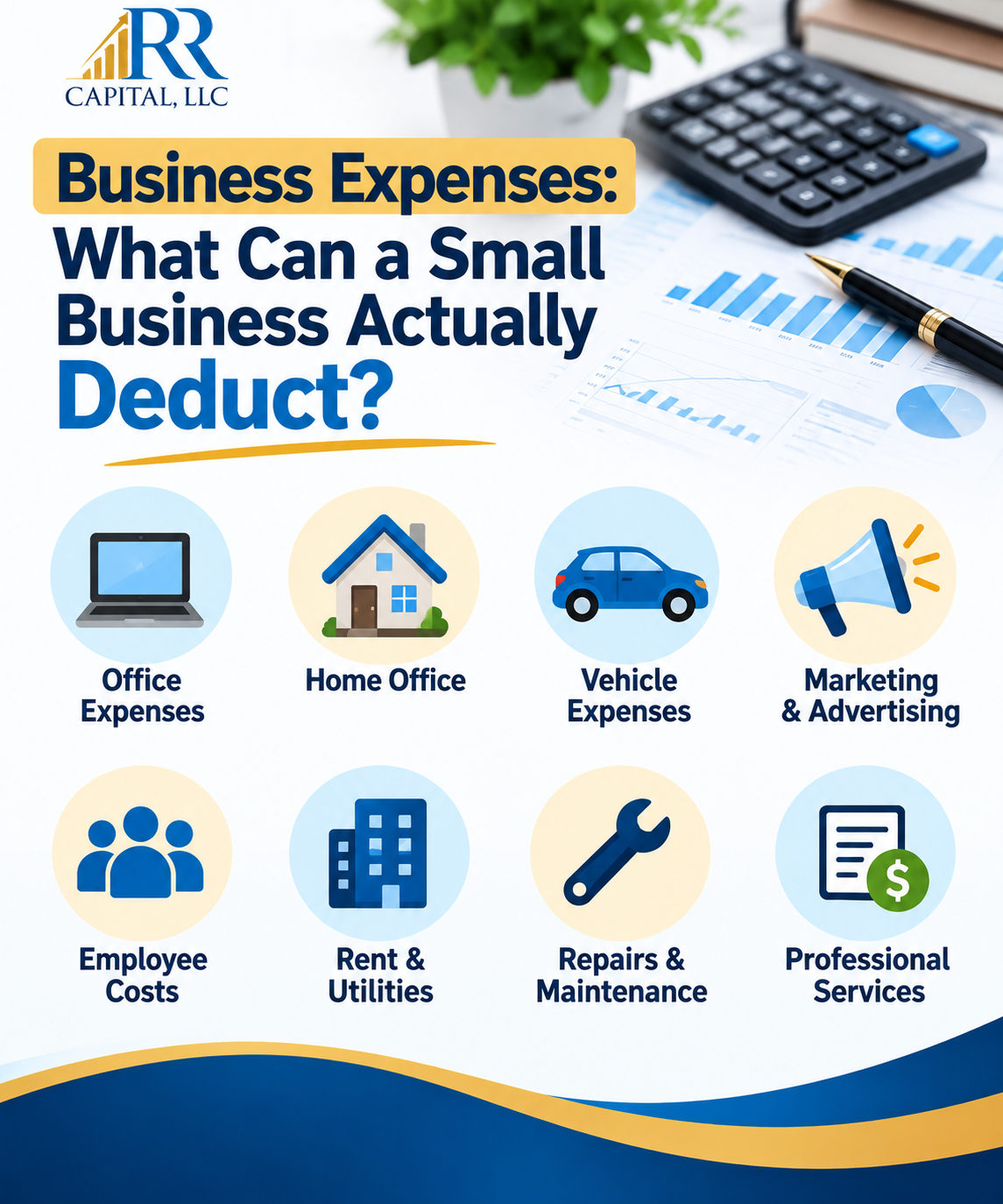
Business Expenses: What Can a Small Business Actually Deduct? One of the most common questions small-business owners ask is: “Can I deduct this as a business expense?” Business deductions can reduce taxable business income, but not every purchase made from a business bank account or credit card automatically qualifies as a tax deduction. As a general federal tax principle, a business expense generally must be ordinary and necessary in carrying on a trade or business to be deductible. An ordinary expense is one that is common and accepted in the business's industry or type of activity. A necessary expense is one that is helpful and appropriate for the business. An expense does not necessarily have to be absolutely essential to qualify as necessary. Understanding these principles can help business owners maintain better records, prepare more accurate financial statements, and avoid incorrectly treating personal spending as business deductions.
-
What Is an Ordinary and Necessary Business Expense? Suppose Maria owns a bookkeeping company. During the year, she pays for: Accounting software: $1,200 Professional liability insurance: $1,500 Business website: $2,000 Advertising: $3,000 Office supplies: $800 These expenses have a clear connection to operating the bookkeeping business and may generally qualify as ordinary and necessary business expenses, assuming the applicable tax requirements are satisfied. Now suppose Maria uses the business account to purchase: Family groceries: $700 Personal clothing: $1,500 Family vacation: $4,000 These expenses generally do not become deductible merely because Maria used the business debit card. The fundamental question is: Was the expense incurred for a legitimate business purpose?
-
Personal Expenses Are Generally Not Business Deductions One of the most common bookkeeping mistakes is mixing personal and business expenses. Suppose John owns a landscaping company. He pays his personal mortgage directly from the business bank account: Mortgage payment: $2,500 The transaction appearing on the business bank statement does not make the mortgage a $2,500 business expense. Depending on the business structure and circumstances, it may instead need to be recorded as an: Owner's draw Shareholder distribution or another appropriate equity-related transaction. Accurate bookkeeping requires identifying the economic purpose of the transaction, not simply the bank account from which it was paid.
-
Vehicle Expenses Vehicles are an important deduction area for many small businesses. A vehicle may be used: 100% for business or partially for business and partially for personal purposes. The tax treatment depends on the circumstances and the method used to calculate deductible vehicle expenses. Two commonly encountered approaches are: Standard mileage method and Actual expense method Eligibility and applicable rules should be evaluated before choosing a method.
Standard Mileage Method Under the standard mileage method, a taxpayer generally tracks qualifying business mileage and applies the applicable IRS standard mileage rate. Example Suppose a consultant drives: Total annual miles: 20,000 Documented qualifying business miles: 12,000 Personal miles: 8,000 The owner would generally apply the applicable standard mileage rate to the qualifying 12,000 business miles rather than deducting all 20,000 miles. Accurate mileage records are important.
Actual Vehicle Expense Method Under the actual expense method, potentially relevant costs may include: Fuel Repairs and maintenance Insurance Registration Depreciation Lease payments, subject to applicable rules Other qualifying vehicle operating expenses If a vehicle has both business and personal use, expenses generally must be allocated between those uses. Example Suppose a vehicle's qualifying annual costs total: $12,000 Business use: 75% Personal use: 25% A simplified allocation would be: $12,000 × 75% = $9,000 business portion The personal portion generally would not be deductible as a business expense. Actual tax calculations may require additional limitations and adjustments.
Commuting vs. Business Mileage Not every mile driven because you have a business is necessarily a deductible business mile. Ordinary commuting between a person's home and regular workplace is generally considered personal. Business travel between qualifying work locations may be treated differently. For example, driving: Home → regular office may generally be commuting. But driving: Office → client's location may generally represent business mileage. The facts matter, particularly when a taxpayer maintains a qualifying home office.
-
Home Office Expenses Many business owners operate from home. A home office deduction may be available when the applicable requirements are satisfied, including rules concerning regular and exclusive business use. Simply working from the kitchen table occasionally generally does not automatically turn part of the home into a deductible home office. Example Suppose a business owner has a 2,000-square-foot home. A separate 200-square-foot room is used regularly and exclusively as the principal office for the business. The business-use percentage in this simplified example is: 200 ÷ 2,000 = 10% Depending on the method used and applicable rules, a portion of certain eligible home expenses may potentially be deductible. These could include certain portions of: Rent Mortgage interest Real estate taxes Utilities Insurance Repairs Depreciation However, the home-office rules contain important limitations and distinctions. The IRS also provides a simplified method that may be available to qualifying taxpayers.
-
Business Insurance Insurance purchased for legitimate business purposes may generally be deductible. Examples can include: General liability insurance Professional liability insurance Commercial property insurance Business vehicle insurance Workers' compensation insurance Cybersecurity insurance Certain employee insurance programs Example A consulting company pays: Professional liability insurance: $2,000 General business liability insurance: $1,500 Assuming these policies relate to the business and satisfy applicable requirements, the company may generally deduct the qualifying costs as business expenses. Personal insurance should not automatically be classified as business insurance merely because the business pays the premium.
-
Accounting, Legal, and Professional Fees Professional services directly connected with operating a business are another common expense category. Potentially deductible expenses can include fees paid for: Accounting Bookkeeping Payroll services Tax preparation Legal services Business consulting Information technology services Other professional services Example ABC Consulting pays: Bookkeeping: $3,000 Business tax preparation: $2,000 Attorney fees related to ordinary business operations: $2,500 Payroll provider: $1,200 Total professional costs: $8,700 Depending on the nature of the services, these costs may generally be deductible business expenses. However, certain professional fees connected with acquiring assets, forming or reorganizing businesses, or other capital transactions may require different tax treatment rather than an immediate deduction.
-
Advertising and Marketing Advertising expenses incurred to promote a business are commonly deductible when they are ordinary and necessary. Examples may include: Social media advertising Google advertising Website marketing Business cards Flyers Signs Digital advertisements Sponsorships with a legitimate advertising purpose Marketing services Example A restaurant spends: Facebook advertising: $2,000 Google advertising: $3,000 Printed promotional materials: $1,000 Marketing consultant: $4,000 Total marketing expenditure: $10,000 If these expenses are legitimate business advertising costs, they may generally be deductible.
-
Equipment and Business Assets Business owners sometimes assume that every business purchase is immediately deductible. That is not always the case. Suppose a company purchases: Computer: $2,000 Office furniture: $5,000 Machinery: $40,000 Commercial vehicle: $50,000 Certain expenditures may need to be treated as capital assets rather than ordinary operating expenses. Instead of immediately deducting the entire purchase price, the business may need to capitalize the asset and recover its cost through depreciation. Depending on the asset and circumstances, provisions such as: Section 179 and bonus depreciation may allow accelerated deductions. However, eligibility, limitations, business-use requirements, and current tax law must be considered.
Expense vs. Asset This distinction is important for accurate accounting. Suppose a construction company buys a: $35,000 piece of equipment Recording the entire $35,000 as "office supplies" simply because money left the bank account would misrepresent the company's financial records. The equipment generally represents an asset. Accounting and tax rules determine how its cost should subsequently be recognized. Good bookkeeping is not simply: Money out = Expense The purpose and nature of the transaction matter.
- Business Travel Business travel may be deductible when it meets applicable requirements and has a legitimate business purpose. Potential travel expenses can include: Airfare Hotels Transportation Rental vehicles Baggage fees Certain other necessary travel expenses Example A business owner travels to another state for a qualifying three-day industry conference. Expenses include: Airfare: $500 Hotel: $900 Ground transportation: $200 Conference registration: $600 These expenses may potentially qualify as business deductions if the travel and conference have a legitimate business purpose and applicable requirements are met. But adding personal activities to a trip can complicate the analysis.
Business Trip or Personal Vacation? Suppose an owner travels to Florida for: Two days of business meetings and then spends: Five days on a family vacation. The owner should not automatically classify the entire trip as a deductible business expense. Business and personal portions may need to be separated, and specific travel rules determine which costs qualify. Calling a vacation a "business trip" does not make it deductible. Documentation and the actual purpose of the trip matter.
- Business Meals Business meals are another area that frequently causes confusion. Qualifying business meals are often subject to a 50% deduction limitation, although exceptions can apply. Example A business owner meets with a client to discuss a legitimate business project. Meal cost: $200 If the meal qualifies and is subject to the general 50% limitation, the deductible amount would generally be: $100 That does not necessarily mean the business should record only $100 as the cash transaction in its accounting records. The books may record the full $200 expenditure, while the tax return applies the appropriate limitation. This is another example of why book accounting and tax treatment are not always identical.
Entertainment Is Different From Meals Business owners should also distinguish meals from entertainment. Entertainment expenses generally face much stricter limitations and are generally nondeductible under current federal rules, even when some business discussion occurs. For example, buying tickets to a sporting event for a client should not automatically be treated the same as purchasing a qualifying business meal. If food and beverages are purchased separately from entertainment, different treatment may potentially apply depending on the circumstances.
-
Office Expenses and Supplies Ordinary office costs may generally be deductible when used for business. Examples include: Paper Printer supplies Pens Postage Business software Small office supplies Certain subscriptions Cloud-storage services Business telephone services Internet services attributable to business use When an expense has both personal and business use, an appropriate allocation may be necessary. Example Suppose a business owner pays: Internet service: $120 per month Annual cost: $1,440 If the service is used for both personal and business purposes, automatically deducting 100% without considering the personal component may not be appropriate.
-
Employee Wages and Payroll Costs Businesses with employees may generally deduct qualifying compensation and related employment costs. Potential expenses include: Employee wages Employer payroll taxes Bonuses Certain employee benefits Payroll processing costs Compensation generally must satisfy applicable requirements, including being reasonable for services actually performed. Special rules apply to compensation paid to business owners depending on the entity's tax classification. For example, a sole proprietor generally does not deduct an owner's draw as wages paid to themselves. An S Corporation shareholder-employee, however, may receive deductible W-2 compensation from the corporation, subject to reasonable compensation requirements.
-
Rent Rent paid for property used in a business may generally be deductible when applicable requirements are satisfied. Examples include: Office rent Retail space Warehouse space Equipment rental Storage space Example A business rents office space for: $2,000 per month Annual rent: $2,000 × 12 = $24,000 If the office is legitimately used for the business, the qualifying rent may generally be deductible. Related-party rental arrangements and certain long-term arrangements may require additional analysis.
-
Interest Expense Interest on debt properly associated with the business may potentially be deductible, subject to applicable limitations. For example, a company may borrow money to purchase business equipment. The principal portion of the loan payment generally is not itself an interest expense. The interest component may potentially qualify as a deduction. Example Annual loan payments: $12,000 Suppose the payments consist of: Principal: $9,000 Interest: $3,000 It would generally be incorrect to classify the entire $12,000 payment as interest expense. The principal reduces the loan balance. The $3,000 represents interest expense, subject to applicable deductibility rules. This distinction is essential for accurate financial statements.
-
Recordkeeping: A Deduction Is Only as Good as Its Documentation Business owners should maintain adequate records supporting their income and expenses. Useful documentation may include: Receipts Invoices Bank statements Credit-card statements Canceled checks or electronic payment records Mileage logs Contracts Payroll records Travel documentation Business-purpose notes A bank or credit-card statement can show that money was spent, but it may not always establish what was purchased or why it was a business expense. Example A credit-card statement shows: Restaurant — $275 That transaction alone does not explain: Who attended? What was the business purpose? Was the expense personal? Was it travel-related? Was it a qualifying business meal? Good documentation helps answer those questions.
Don't Wait Until Tax Season Imagine a business owner has: 1,500 transactions during the year. The owner does no monthly bookkeeping. At tax time, the owner gives an accountant twelve months of bank and credit-card statements and expects every transaction to be correctly identified. The accountant may see: Amazon — $425 But was it: Office equipment? Inventory? Personal household items? Computer accessories? A gift? Without documentation, the transaction may be difficult to classify accurately. Regular bookkeeping makes tax preparation significantly easier and can improve the reliability of the company's financial statements.
Common Business Expense Mistakes Small-business owners should watch for several common problems: Mixing personal and business expenses Using the business bank account for personal spending creates unnecessary bookkeeping complications. Assuming every business-account transaction is deductible The account used to pay an expense does not determine its tax treatment. Failing to keep receipts and documentation Bank statements alone may not explain the nature or business purpose of a transaction. Deducting 100% of mixed-use expenses Vehicles, phones, internet, and other items may have both personal and business use. Treating asset purchases as ordinary expenses Equipment and other long-term assets may require capitalization and depreciation. Ignoring mileage records Reconstructing an entire year's business mileage at tax time can be difficult and unreliable. Confusing loan payments with expenses Loan principal and interest have different accounting treatment. Treating owner's draws or distributions as expenses Payments to owners are not automatically deductible business expenses.
A Practical Example Suppose ABC Consulting LLC has the following annual transactions: Revenue: $200,000 Office rent: $18,000 Advertising: $8,000 Professional insurance: $2,000 Accounting and legal fees: $5,000 Office supplies: $2,500 Business travel: $4,000 Business meals: $3,000 Equipment purchase: $20,000 Owner's personal vacation paid by business: $5,000 Owner's draw: $30,000 It would be incorrect to simply add every cash outflow together and deduct it from revenue. Each transaction must be classified appropriately. The office rent, advertising, insurance, and professional fees may generally represent ordinary business expenses. The qualifying meals may be subject to a deduction limitation. The $20,000 equipment purchase may require capitalization and depreciation or may qualify for another tax treatment. The owner's personal vacation generally would not become deductible simply because the business paid for it. And the $30,000 owner's draw generally would not be a deductible operating expense. Accurate tax preparation starts with accurate classification.
Business Expense vs. Cash Outflow This may be the most important concept in this article: Not every cash outflow is an expense. Money leaving a business bank account could represent: Business expense Asset purchase Inventory purchase Loan principal payment Owner's draw Shareholder distribution Partner distribution Personal expense Loan to an owner or another type of transaction. The accounting and tax treatment depends on what actually happened.
Final Takeaway Business deductions can reduce taxable income, but business owners should not approach deductions with the mindset of: “How can I write this off?” A better question is: “What was the business purpose of this expense, and how should it properly be classified?” A legitimate business expense should generally have a clear connection to operating the business and satisfy applicable tax requirements. Business owners should pay particular attention to: Ordinary and necessary expenses Vehicle expenses and mileage Home-office expenses Business insurance Professional fees Advertising and marketing Equipment and depreciation Business travel Business meals Payroll expenses Rent Interest Personal vs. business spending Proper documentation Good recordkeeping throughout the year can be just as important as identifying the deduction itself. Maintaining separate business accounts, reconciling accounts regularly, properly categorizing transactions, tracking mileage, retaining receipts, and documenting the business purpose of expenses can help produce more accurate financial records and make tax preparation significantly easier. The goal should not simply be to maximize deductions. The goal should be to claim legitimate deductions while maintaining accurate and supportable business records.
Disclaimer
This article is intended for general educational and informational purposes only and does not constitute tax, accounting, financial, or legal advice. Tax deductions depend on the taxpayer's facts and circumstances and applicable federal, state, and local laws. Tax laws, deduction limits, mileage rates, depreciation rules, and other requirements may change. The examples in this article are simplified illustrations. Business owners should consult qualified tax, accounting, and legal professionals regarding their specific circumstances before claiming deductions or making significant tax or business decisions.